La Bola Negra
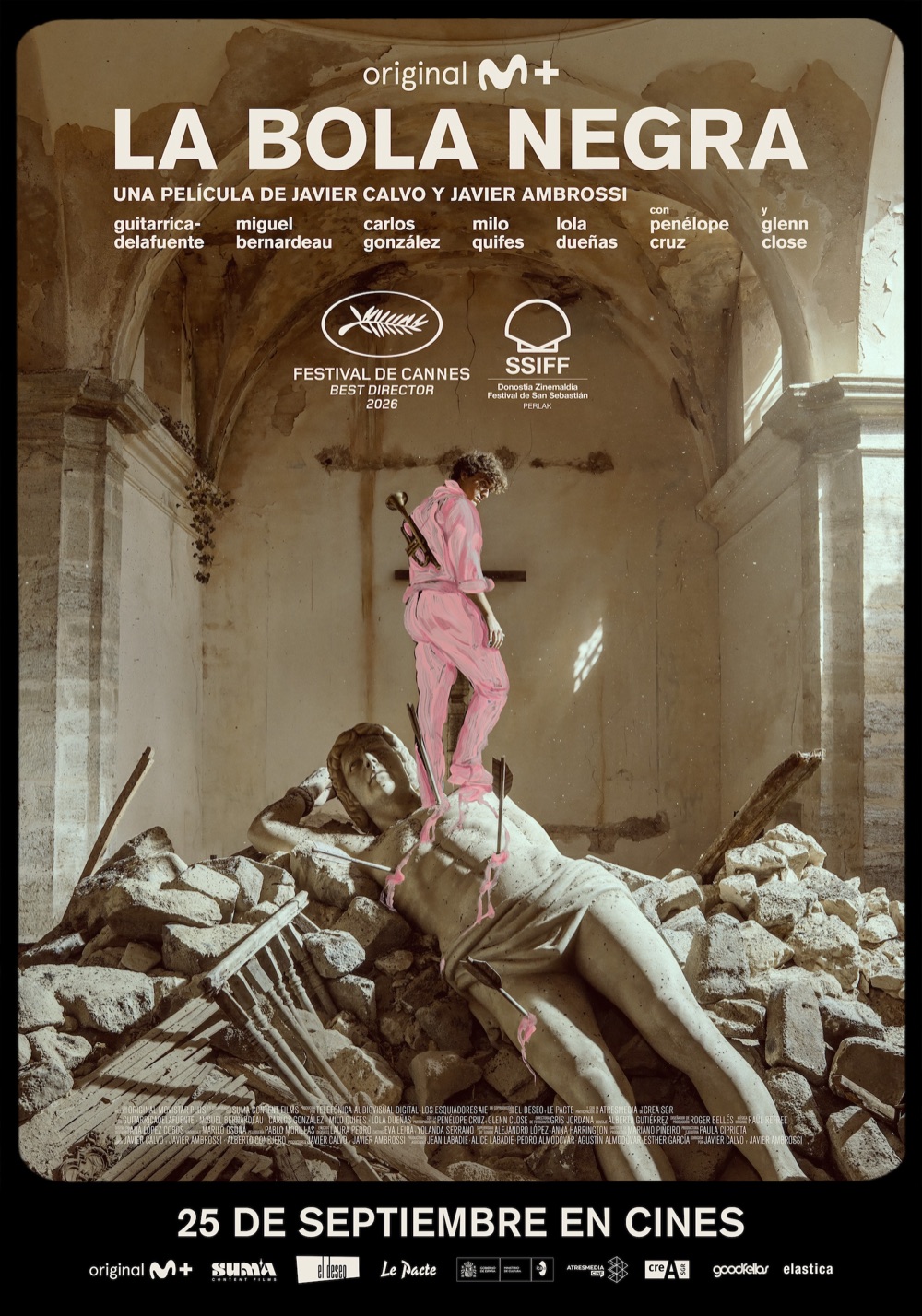
Yesterday I went to the Irish Film Institute with a few friends to see La Bola Negra. By the end I was bawling. It is a tragic love story, and it runs 159 minutes, so the bawling had time to sit down and get comfortable.
Javier Calvo and Javier Ambrossi directed it. Together they are Los Javis. They wrote the script with Alberto Conejero, from four pages Federico García Lorca never finished and from Conejero’s play La piedra oscura. Spain opened it on 25 September. The IFI opened it on 6 November, which is how I spent a Friday in Temple Bar. Wikipedia calls it a queer epic in the first sentence.
Three stories. They take their time about becoming one.
In 1932, Carlos (Milo Quifes) wants into a club in Granada. The members drop balls into an urn, white for yes, black for no. He gets the black one. The room has already heard the rumour, and the rumour is that he is gay. Those pages are Lorca’s. The film does the rest.
In 1937, during the Spanish Civil War, Sebastián (Guitarricadelafuente, a singer, in his first film, and annoyingly good at it) is a village trumpeter waiting to welcome Italian troops. The planes strafe the village. His mother is killed. He runs, he survives, and someone hands him a rifle on the Nationalist side. His job is to guard a wounded Republican prisoner. The prisoner is Rafael Rodríguez Rapún, played by Miguel Bernardeau. Rapún was real. He worked in Lorca’s company La Barraca, and he was Lorca’s lover. Sebastián falls for him anyway, steadily.
In 2017, Alberto (Carlos González) is a historian, and a grandfather he never knew has left him something. Alberto is Sebastián’s grandson. The inheritance is what remains of the manuscript. Lorca is in the film as well, played by Alberto Cortés.
The scenes I keep are Sebastián’s. They also give the ending away.
He runs from the Italian planes and climbs a huge statue of Saint Sebastian. The saint has been a queer image for centuries, arrows included, so the metaphor arrives with the subtlety of an air raid. I loved it. Sebastián runs back sure that Rafael is already dead, and he stays. An Italian comrade gives them one last goodbye. Then Sebastián is on the firing squad, and he is the one who shoots, and he goes back to the body. I did the crying for both of us. Colm Tóibín, in the New York Review of Books, thinks a good deal of this is spectacle, close to a romp, and that the soldiers look like a cologne advertisement. The cologne point is fair. I have weaker objections to handsome men than he does.
The places do as much work as the plot. Gris Jordana shot it on 35mm. She has said the three decades share one grade, and that the years change in how the camera moves. A landscape is already an argument. I like directors who let it talk.
The cast being this handsome helped. I am past pretending otherwise. Penélope Cruz turns up as Nené, singing for the troops. Glenn Close plays a Lorca scholar, a nod to Ian Gibson, the Irish biographer who spent years on Lorca. I live here, so I accept the nod, and the book goes on the list behind the poems.
The screening was the weak part. Third row, and the heating in the IFI was on full blast, as if a civil war ought to double as a sauna. I sat through the execution sweating through my shirt. Other than that, a masterpiece. It is in Spanish, with some Italian, which is the right number of languages. I like European films that sound as if they come from somewhere, and that trust the somewhere.
I have never read Lorca. I did not know he was gay. That is a gap large enough to lose a manuscript in. I should start with the sonnets and pretend it was the plan. The film already gave me one, from the Sonetos del amor oscuro. Rafael drops a scrap of it. The score later answers with Mira que nos acechan. The last line does the rest.
El amor duerme en el pecho del poeta
Tú nunca entenderás lo que te quiero porque duermes en mí y estás dormido. Yo te oculto llorando, perseguido por una voz de penetrante acero.
Norma que agita igual carne y lucero traspasa ya mi pecho dolorido y las turbias palabras han mordido las alas de tu espíritu severo.
Grupo de gente salta en los jardines esperando tu cuerpo y mi agonía en caballos de luz y verdes crines.
Pero sigue durmiendo, vida mía. ¡Oye mi sangre rota en los violines! ¡Mira que nos acechan todavía!
— Federico García Lorca, Sonetos del amor oscuro
La Bola Negra sits with the gay films I will actually argue for: Weekend, by Andrew Haigh; Mine Vaganti, by Ferzan Özpetek; and Call Me by Your Name, by Luca Guadagnino.
— Made withCursor