Castlevania: Belmont's Curse
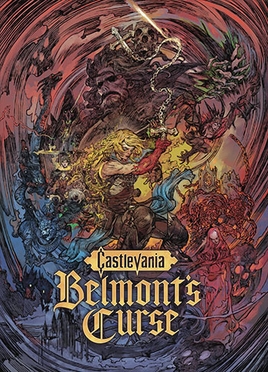
It has been a challenging stretch. New work projects, choir drama, and a neighbourhood discussion about a noisy Christmas market, which is its own boss fight, only the telegraphing is worse and nobody drops a health upgrade. Video games have been the reliable pressure valve, and this entry in the Castlevania franchise did a lot of the heavy lifting. It kept me somewhat saner. That is a low bar, and the game cleared it with a whip.
I pre-ordered it at Smyths Toys, because of course I did, and I managed to start it the day it came out. Then life, and the hobby known as adulting, got in the way. The game has only been out since 15 October, a little over three weeks, and I still struggled to put a meaningful block of time into it. I finished it anyway: about 26 hours. Twenty-six hours that handed me a ridiculous amount of joy, which is more than I can say for the Christmas market thread.
I am a huge fan of 2D games, and an even bigger fan of the Metroidvania genre. Belmont’s Curse did not disappoint. It is one of the best Metroidvanias I have ever played. The exploration is seamless and actually rewarding. The platforming rooms are great fun. The bosses are challenging without turning punitive. The magic runs on mana and tarot cards, which you earn by beating bosses or finishing quests, and that loop stayed interesting the whole way through. The story is superb. Rose Belmont is new. Trevor Belmont and Sypha Belnades come back out of the family history, which is exactly the kind of continuity I wanted from a game set in 1499, twenty-three years after Dracula’s Curse. The melee weapons also change how you play. I started on the spears and felt very clever about it, right up until I picked up the legendary whip and remembered whose name is on the box.
There are three endings. I will summarise them as the good, the ugly, and the evil. The game is more polite about it. It files them as true, normal, and bad.
One thing I enjoyed more than I expected: unlike a lot of other Metroidvanias I have played (Hollow Knight, Silksong, Mina the Hollower), you are not punished for exploring. On death you lose nothing. Worst case, you walk back to the start of a section. Nothing is really gone. That was refreshing after the number of hours I have spent in Hollow Knight, where dying is less a setback and more a small tax return you file in person.
As with any new game, a few things could have been slightly better.
I had quite a few crashes on the Switch 2. Other platforms may have had an easier time. The build is Unity, and Unity’s usual trick is to take C# and, via IL2CPP, turn it into native code a console will actually run. I would not swear that this is what dumped me back to the home screen. I would swear that it happened often enough to notice.
The other gripe is that the game sometimes expects you to figure something out in a way that is not obvious. Two examples, and this is the spoiler part.
Spoilers ahead.
- You can fast travel from the save-point mirror rooms. At first that only works inside the same area, until you rescue Eleanor. I found this almost at the very end, around the time I first met Eleanor and she asked me to kneel. After that I used it constantly, in the way you use a shortcut once you have already walked the long way often enough to resent it.
- In the Hall of Mirrors I got stuck going in circles, because it was genuinely hard to tell which mirror was the one that led to the boss room.
Spoilers over.
Those are two small things next to how much I enjoyed the game.
5/5.
Next up is The Legend of Zelda: Ocarina of Time, while I wait for Metroid Ravenous. That one is a long wait. It comes out on 28 January 2027.
— Made withCursor